Engaged Buddhism names a way of practicing that does not stop at the meditation cushion. It brings Buddhist ethics, awareness, and compassion into the social, political, environmental, and communal worlds we live in. Practice and life are not separate. What we cultivate inwardly is meant to meet the conditions of the world as it is.
The term itself is often associated with Thich Nhat Hanh, who spoke and lived this integration during the Vietnam War. His teaching linked mindfulness directly with peace-making and social action. Yet the impulse behind engaged Buddhism is much older than the name. From the beginning, Buddhist communities cared for the sick, tended to the well-being of their neighbors, and held the intention to reduce suffering—both within the heart and in the world around them.
Today, engaged Buddhism appears in many forms. It shows up in climate action and the grief that accompanies ecological loss. It appears in work toward racial justice, peace-building, gender equity, LGBTQIA support, economic and prison reform, and trauma-informed mindfulness. Across these varied expressions, there is a shared understanding: meditation and ethical action are inseparable. Awareness does not remain private. Compassion does not remain abstract.
This understanding has shaped a recent shift in our sangha. As we make space for engaged Buddhism more explicitly within our weekly rhythm, we are doing so with care. Change, even when it is intentional and thoughtfully introduced, carries uncertainty. Impermanence is not only a teaching we reflect on—it is something we feel. Even expected change can stir anxiety or a sense of the unknown. That response is human. It is shared.
Reflective meditation has always held a wide range of human experience. Whatever arises—fear, hope, confusion, resolve—can be met within practice. We trust that pairing this reflective space with a clearer direction toward engaged Buddhism will deepen the practice rather than fragment it. Still, we move gently, knowing not everyone arrives at readiness at the same pace.
This moment of change brings us back to how this community began.
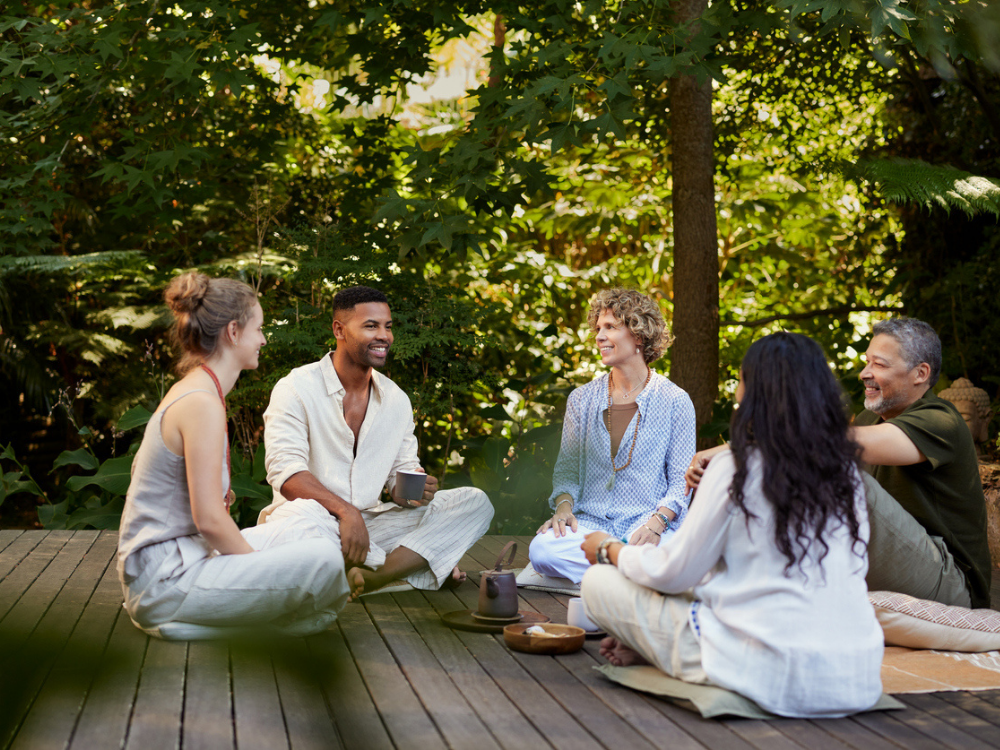
In 2020, we were living through a collective crisis. The pandemic disrupted the world as we knew it. Although each of us was affected differently, there was a shared sense of collective trauma. Out of that recognition came the impulse to gather—to create a space where we could be present together with what was happening, rather than carry it alone.
We did not know how long this group would last. We did not know what it would become. Over time, it continued through volunteer cooperation, friendship, and care. Those relationships deepened slowly, and they became the fuel that sustains us. What emerged was not a finished structure, but a living community that could hold change.
Now, as we witness multiple crises unfolding in the world, we feel again the mix of reactions they bring: hopes and disappointments, fears and longings. The intention is not to resolve these experiences, but to bring them into reflective meditation—to let them be held in awareness, together. We have done this before. We have changed before. Each time, we stepped into something still forming, without certainty about where it would lead.
And each time, the community carried us.
This shift is another step into the unknown, another round of beginning again. We have walked through uncertainty before, and we will do so again—together. That shared willingness, and the care we hold for how this group develops, is what matters. It has always been what matters.