This session is part of Reflective Meditation’s Daily Online Meditation practice at reflectivemeditation.org/dailyonline.
In the Satipatthana Sutta, the third foundation of mindfulness invites us to know our moods and states of mind — to recognize that our awareness of experience is always colored by how we’re feeling, by being in a body, by what we’ve lived through. This is the teaching Linda brings to this session, titled simply: No Neutral Observer.
A Moody Observer
The third foundation points toward something important: there really is no neutral observer of our experience.
“I’m not a neutral observer of my life,” Linda says. “I’m a moody observer. I’m a feeling observer. I’m an embodied observer.” And that, she suggests, really changes the way we understand awareness itself.
When Linda first came to Buddhist practice in 1998, she had just survived a near-death experience. Close on the heels of that, her eight-year-old niece died of complications from lung cancer. Those events, she says, did not politely wait outside of her meditation. They filtered in — sometimes raw and loud in the foreground, sometimes more like a low atmospheric pressure moving through her in the background.
Being new to practice, she thought something was wrong. The grief, the fear, the existential vertigo — she took them to be obstacles to insight. Over the years, she’s come to question that. What if they weren’t obstacles at all? What if they were actually the conditions for insight, for care, for calm, and even for peace?
The Filter, Not the Plant
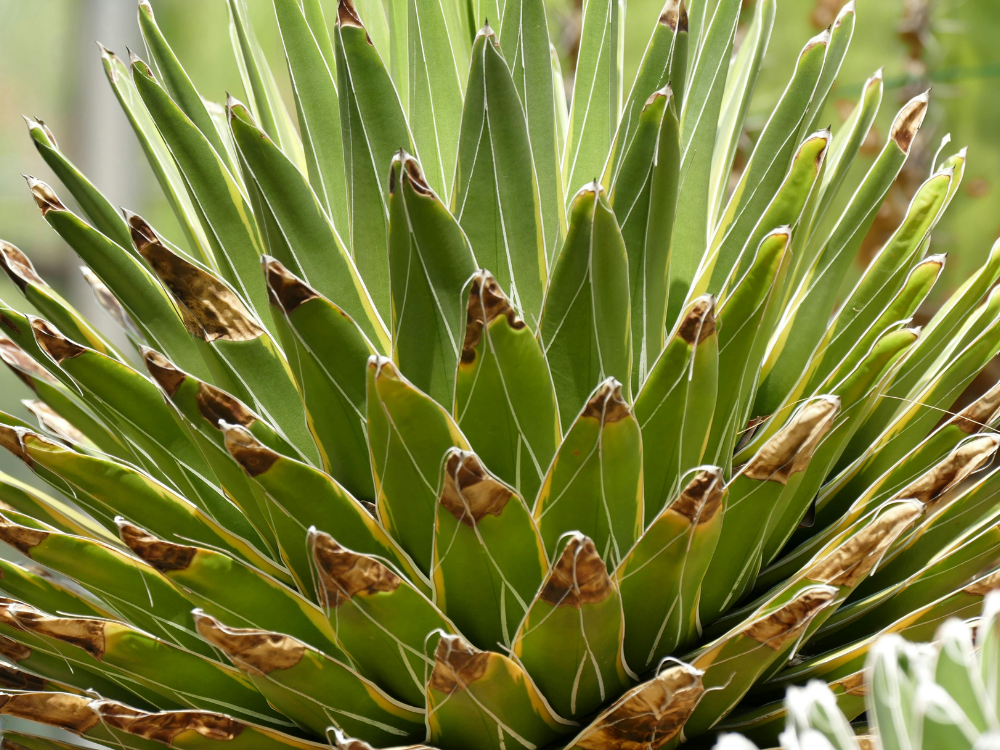
The day before this session, Linda was hiking in the Santa Monica Mountains and came across a large agave in bloom. She took out her phone to photograph it and noticed that her camera offered a choice of filters before she even took the shot.
She held onto that image. The agave didn’t change. The filter did. “Moods and states of mind are like that,” she says. “The same life, a different filter. The content doesn’t necessarily disappear, but the filter changes — and the filter allows me to see something from another angle, another perspective.”
This matters especially when it comes to our views, which Buddhism takes seriously. Whether we translate “right view” as right, appropriate, skillful, or sensitive, we’re still advised to hold our views lightly — because whatever angle we’re looking from isn’t the whole picture. It’s a part of it.
In depression, we can think nothing matters. In grief, that it’s all about loss. In fear, that there’s no safety anywhere. These are real experiences. And they are also filters.
Moods as Information
The intention in reflective meditation isn’t to dissect experience into tidy categories — this is a mood, this is a feeling, this is a body sensation. They all overlap. But if we can say something more about the mood, more about the state of mind, it gives us more information.
That information can tell us something about how we’re attaching to something, how we fear it, how we care, what we value, what we long for. “This information is not the enemy of insight, care, calm, and peace,” Linda says. “It’s actually the living conditions of it.”
Some interpretations of Buddhism have historically downplayed this variety — offering a map of experience in advance, smoothing over the texture of individual lives. The invitation here is different: to restore dignity to the many ways we actually experience our meditation, our relationships, our days.
Moods and states of mind are asked to be described — to yourself, or aloud in reflection — not because they’re always easy to name, but because naming them, even partially, brings us closer to how awareness is actually happening. And that, Linda suggests, is how awareness becomes more human. And less of an ideal.