This session is part of Reflective Meditation’s Daily Online Meditation practice at reflectivemeditation.org/dailyonline.
Linda came directly from Berkeley this morning, from Dave Hubble’s memorial. Dave practiced with the daily online sangha for six years. She had known him for fifteen years before that, through meditation. And what Janet created for his memorial felt, she says, deeply in the spirit of Reflective Meditation.
A memorial without a script
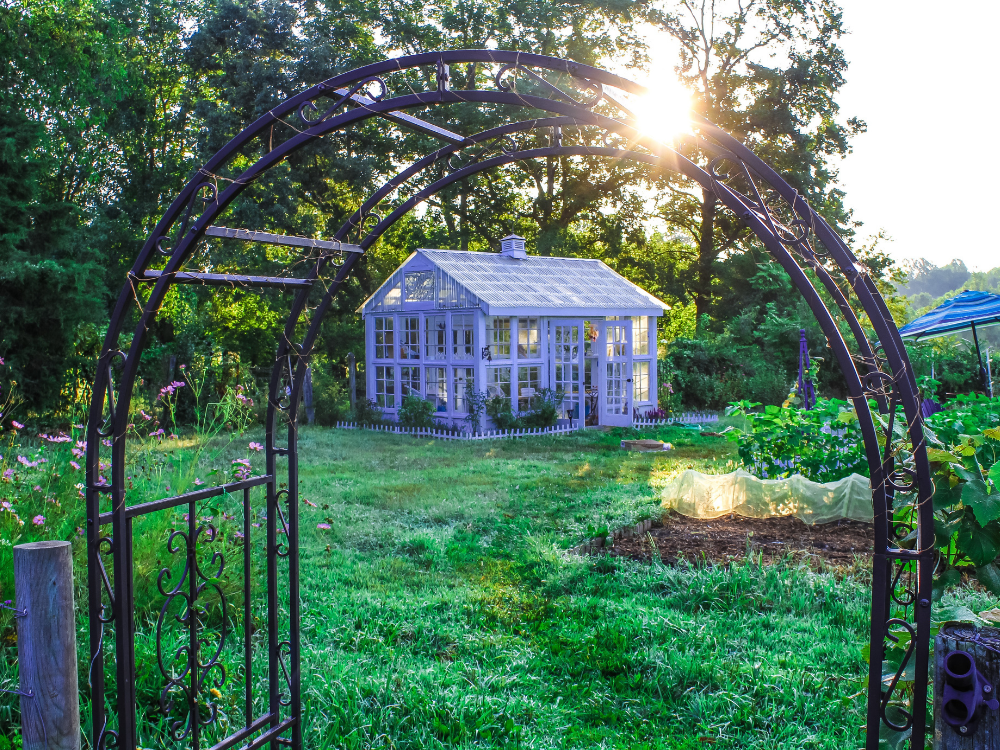
There was no one telling people what to do. No formal eulogy, no scheduled speeches about Dave’s life. About thirty-five people arrived at Janet’s home and garden, and each was given a cup of Dave’s ashes mixed with compost, and invited to take them to some part of the garden and place them there — in their own way, in their own time.
Some people started to ask when someone was going to tell them what to say. The answer was: no one. Each person got to enter the space and come to know Dave from their own experience with him, their own memories, their own relationship to his absence.
Inside the house, Dave’s artwork filled every room. He had been a sculptor and visual artist — something Linda hadn’t fully known about him. Guests were given small stars to place on any piece they wanted to take home. Janet wanted to distribute not only his ashes but his work throughout the community. Linda and her husband drove up, so they could carry things back. She came home with four of his sculptures.
Discovering someone after their death
What struck Linda most was something Janet said during the gathering: she was discovering Dave alongside her guests. She had known him for decades, more fully and more closely than anyone. And still there were pieces of him becoming visible that she hadn’t known, or hadn’t seen in this way.
One piece Dave had made was a kind of written record of his life, divided into decades with summary statements about each one. The handwriting was small, and a few people crowded around with a magnifying glass to make it out. The last decade read: I’m no longer interested in pushing myself.
Linda stood there for a moment, taking it in. The practice had taken hold in this man in ways that weren’t visible from the outside, weren’t apparent in day-to-day interaction, weren’t fully known even by those who practiced alongside him for years. There was more to Dave than what any one person’s memory held.
Memory and the self
This is where the week’s topic of Anatta — the teaching of no fixed self — came alive for Linda in a new way.
Much of her sense of self comes from memory. It provides continuity: the sense that she was recognizably herself when she was younger, different but connected to the person she is now. That continuity feels important and valuable. When it is disrupted or lost, something genuinely harmful can happen.
And yet memory is also where the self can calcify. We remember being hurt in a particular way, and it becomes a belief about who we are or who someone else fundamentally is. We absorb someone else’s story about us — you’re like this, you’re the kind of person who — and it becomes our own memory, our own self-concept, carried forward without re-examination. We remember something we did well, or badly, and let it stand in for something larger and more fixed than it actually was.
Reflective Meditation, Linda observes, invites memories into the sitting rather than treating them as distractions to be set aside. She’s surprised sometimes by what surfaces — things she hasn’t thought of in years, or recurring memories she’s finally seeing from a different angle. Being in a different place in her life now, she can look back at an old memory and feel it differently, understand it differently, sometimes release something she’d been carrying without quite knowing it.
No one is fully contained by memory
Dave’s memorial made something clear that Linda already knew but hadn’t felt so directly: none of us is completely contained by others’ memories of us, or even by our own.
Janet was still meeting Dave at his memorial. Linda is still getting to know him — through his sculptures, through what others shared, through what was written in his handwriting on that card. There is always more than what was visible while someone was alive. More than what any one relationship could hold. More, probably, than the person themselves could fully know.
That isn’t a loss. It’s closer to the nature of what a person is: not a fixed, bounded thing that can be fully known and finally summed up, but something that keeps revealing itself, that continues to touch other lives in ways that can’t be predicted or contained.
The teaching of Anatta, Linda closes, doesn’t dismiss the self. It keeps opening the question of what the self actually is — and the answer, each time she looks, turns out to be more than she expected.